Personal Project
Flowers Field
A Story with a lot of ups and downs
Overview
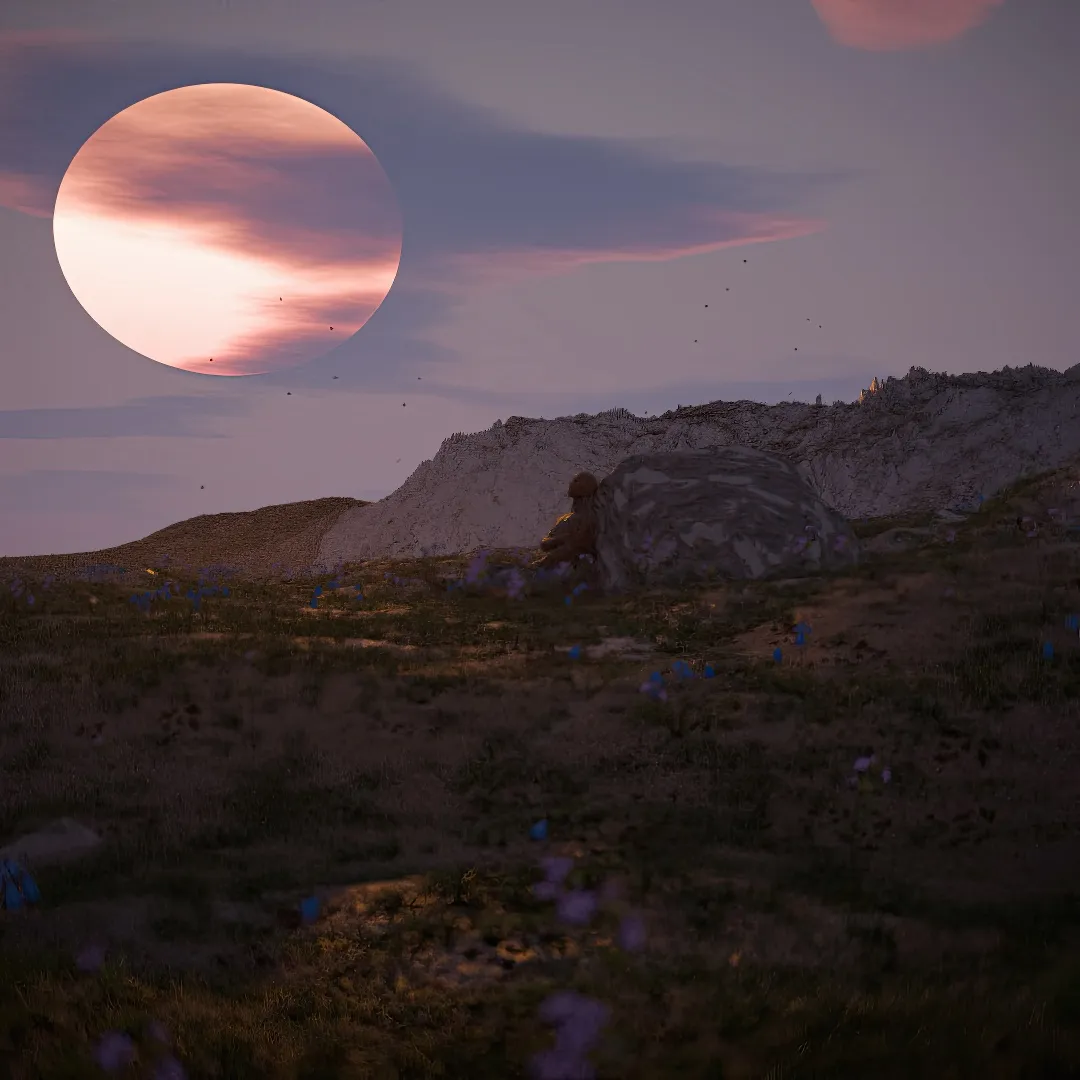
This environment is a story. It took us about three months to create, with plenty of ups and downs along the way. We faced many challenges throughout the process, but each one taught us something new. Looking back, we learned a tremendous amount while creating this environment.
Creative process
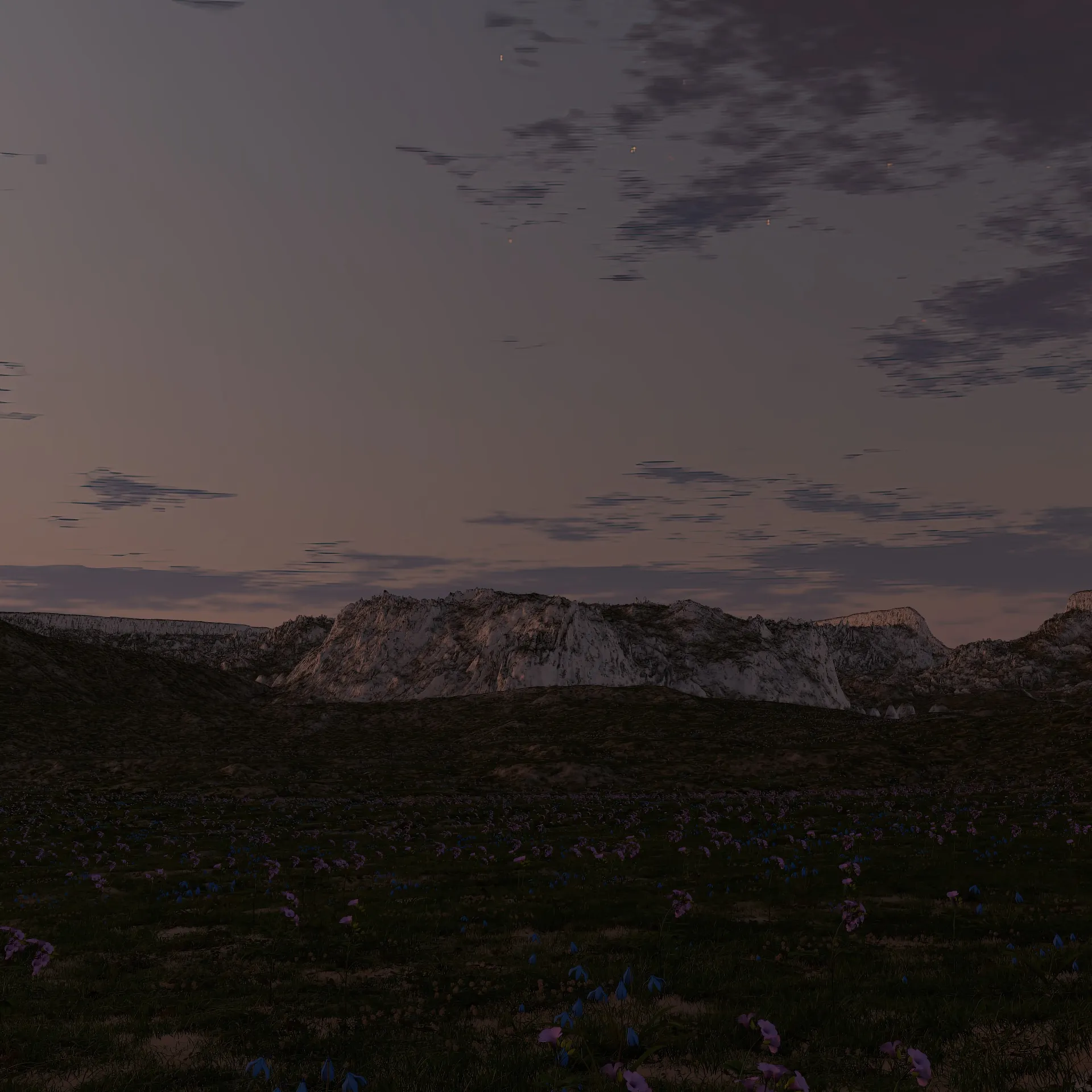
For this terrain, we approached texture separation differently. We still used a SplatMap, but this time through an RGB system with the Separate RGB node. It simplified the workflow and allowed us to remove the Greater Than node and ColorRamp entirely.
The second major challenge was scattering. We tested two systems. Gscatter worked well, but the scene became too heavy to render sustainably, even with 64 GB of RAM. Since we want clients to use this product freely and across different hardware, we chose Biome Reader instead.
Biome Reader is free and works well for customization, but it doesn’t provide camera culling like Gscatter. So we built our own culling system to keep the environment precise and optimized across different hardware.
We optimized both the simplified and advanced versions using a weight-paint-based SplatMap culling system. We used two planes for camera-based culling, then used the Weight Edit modifier to transfer the SplatMap into vertex weights. By separating the red and blue channels, we could clearly distinguish soil from rock and prevent vegetation from appearing where it shouldn’t.
The principle is similar to Gscatter’s black-and-white SplatMap approach, but implemented through weight painting.
Now, the part that will probably interest you most: fauna.
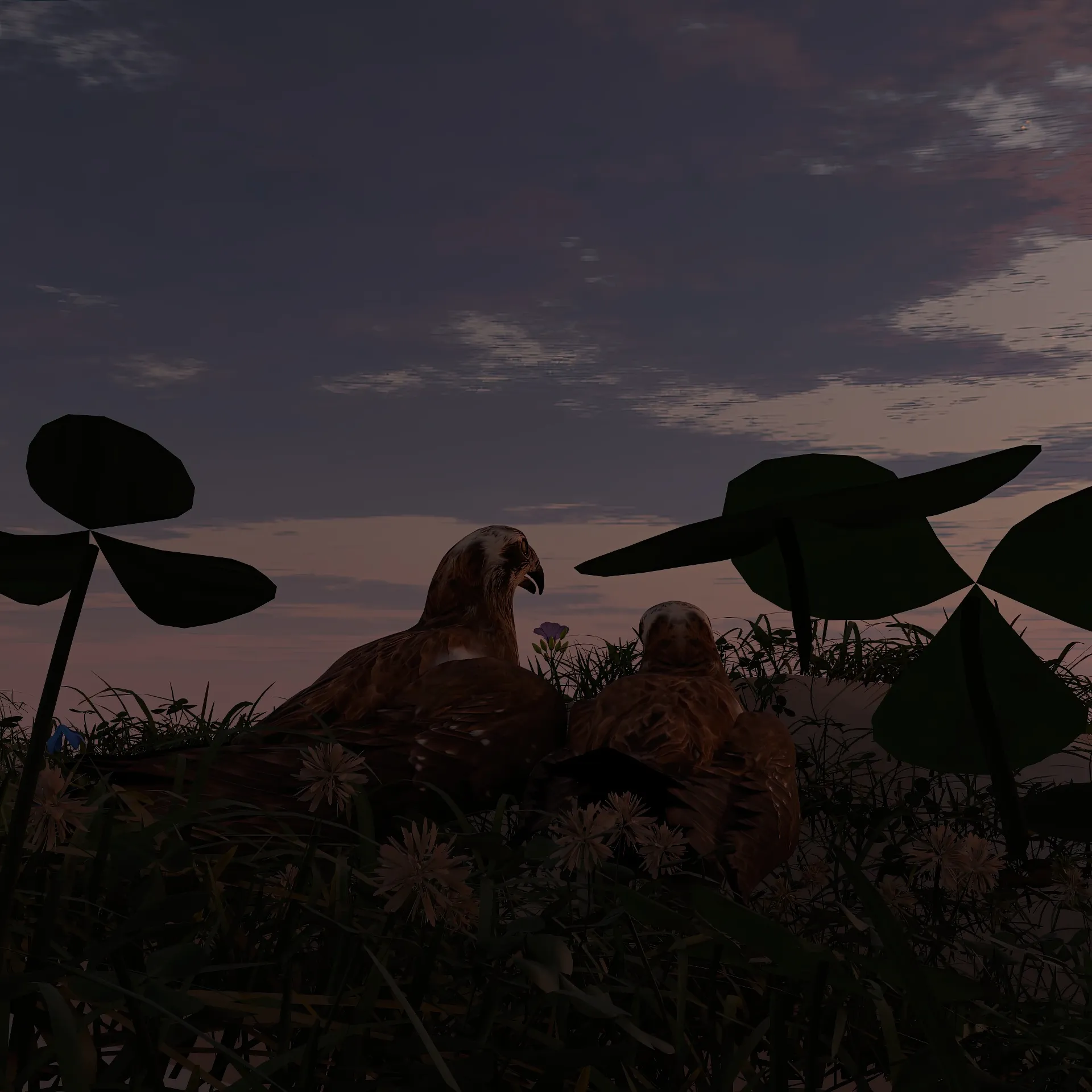
For the wildlife, we used LAZY3D’s Fauna Master Pro. It allows us to populate animals quickly while creating realistic behavioral relationships. The scene includes foxes, sparrows, pigeons, butterflies, bees, and some perched birds such as hawks and osprey.
The system uses Geometry Nodes and different collections, including an “Evasion” collection for predators. When a predator approaches, peaceful animals react and move away.
These were the three main challenges of this environment: texture separation, scattering, and fauna. More importantly, it was a major learning experience for us. Every part of this environment pushed us outside our comfort zone, and we had to learn throughout the entire process.
We also used PSA (Physical Starlight and Atmosphere) for the sky. It’s simple, efficient, and well optimized for rendering, especially when working within 32–64 GB of RAM.